
EUNJEONG
JEON


 Tangible-E-M-otion |  Tangible-E-M-otion |  Tangible-E-M-otion |
|---|---|---|
 Tangible-E-M-otion |  Tangible-E-M-otion |  Tangible-E-M-otion |
 Tangible-E-M-otion |  Tangible-E-M-otion |  Tangible-E-M-otion |
 Tangible-E-M-otion |  Tangible-E-M-otion | 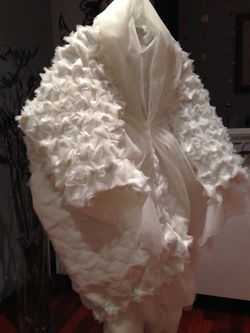 IMG_7866 |
 IMG_4529 |  IMG_4518 |  IMG_4521 |
 Tangiable-E-M-otion |  Tangiable-E-M-otion |  Tangiable-E-M-otion |
 Tangiable-E-M-otion |  Tangible-E-M-otion |  Fashioning Technology |
As interest in robotic and assistive technologies for emotional regulation grows, there remains a critical need for solutions that are both non-invasive and highly accessible. Traditional assistive technology for individuals with autism (ASD) or dementia often relies on rigid, data-heavy interventions that can trigger sensory hypersensitivity. The Tangible-E-Motion project rejects this "cold" approach:
-
From Monitoring to Regulating: In collaboration with Chubu University, I have developed fabric-based devices that act as empathetic "play partners." By using sensory-rich materials like knits and felt, these devices translate biological stress into soothing, tactile stimuli.
-
Design for Emotional Security: Utilizing Laban Movement Analysis, I design technology that conforms to the body's natural "holding" and "wrapping" behaviors. This creates a sense of enclosure and agency, allowing users to regulate their nervous systems at their own pace.
-
Multimodal Efficacy: The device delivers dynamic tactile pressure—facilitated by airflow-mediated stimulation—integrated with rhythmic visual and auditory feedback to provide a tangible grounding mechanism. Evaluations with adult participants undergoing arousal induction demonstrated the device’s efficacy in lowering physiological markers of stress, with the most consistent reductions in tonic electrodermal activity (EDA) occurring through the combination of airflow-mediated pressure and visual feedback. While inter-individual variability remains a factor, these results validate the importance of personalized, wearable design and provide a mandate for future large-scale trials.
Work created in collaboration with Associate Pro. Jaeryoung Lee, Aichi IsamuYu, Kosei Miura, Makino MitsuruHiroshi at Department Robotic Science and Technology at Chubu University in Japan and Dr. Senior Researcher Min-Gyu Kim at Korea Institute of Robotic and Convergence in South Korea. This study was supported by the Special Research Fund of Chubu University (29IS07B).
Work related to Websites

